
Machine vision has become a standard tool in modern manufacturing, enabling production lines to inspect products, identify defects, and verify quality at high speed. While visible-light imaging remains effective for many tasks, it cannot always distinguish between materials that appear identical to the camera.
Manufacturers increasingly need inspection systems capable of identifying material composition, detecting contamination, and verifying product characteristics beyond what can be determined from shape, color, or surface appearance alone. Spectral measurement technologies address this challenge by analyzing how materials interact with light across different wavelengths.
From recycling facilities and food processing plants to pharmaceutical production and industrial manufacturing, spectral devices are providing the data needed to improve inspection accuracy, automate material classification, and support process control.
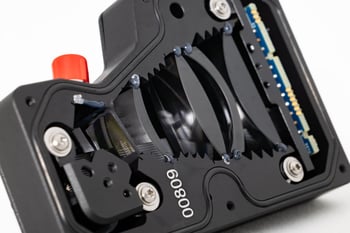
Looking Beyond Conventional Machine Vision
Traditional machine vision systems operate within the visible spectrum and are widely used for dimensional measurements, assembly verification, defect detection, and color inspection.
Many manufacturing processes, however, require information that cannot be obtained from a standard image.
Materials absorb, reflect, and transmit light differently across the electromagnetic spectrum, creating unique spectral signatures. Measuring these signatures makes it possible to identify materials, distinguish between similar products, detect contamination, and verify process conditions in ways that conventional imaging cannot.
This is driving adoption of spectrometers, multispectral cameras, and hyperspectral imaging systems in automated inspection equipment.
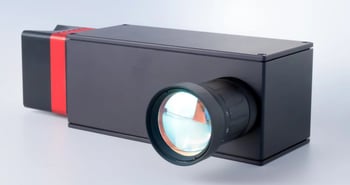
Spectral Inspection and Automated Sorting
Automated recycling is one of the most established applications for spectral measurement.
Plastic types such as PET, HDPE, PVC, and polypropylene often appear similar when viewed by conventional cameras. Spectral systems can differentiate these materials by measuring their reflectance characteristics at specific wavelengths, allowing sorting equipment to identify and separate materials in real time.
Achieving high classification accuracy is increasingly important as recycling facilities work to improve material purity and increase throughput.
Similar techniques are used throughout industry. Food manufacturers use spectral analysis to identify contaminants and verify product quality. Pharmaceutical producers use spectral data to distinguish between compounds and formulations. Industrial manufacturers use spectral measurements to monitor coatings, validate material consistency, and detect process variations.
In each case, material properties rather than visual appearance determine the result.
Why Spectral Data Matters
The performance of an automated inspection system depends on the quality and relevance of the data it collects.
Conventional machine vision relies primarily on image-based parameters such as contrast, color, geometry, and texture. Spectral measurement adds information related to material composition and chemical characteristics.
This enables manufacturers to:
- Differentiate visually similar materials
- Detect contamination not visible to standard cameras
- Verify material composition and product consistency
- Improve sorting accuracy
- Reduce false rejects and missed detections
- Monitor processes in real time
Access to material-level data allows manufacturers to automate decisions that would otherwise require manual inspection or laboratory analysis.
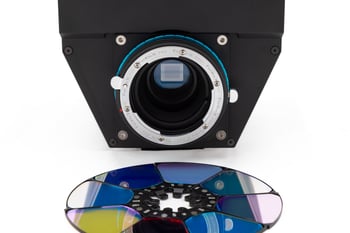
Integrating Spectral Devices into Automated Systems
For OEMs and system integrators, the challenge is not simply collecting spectral data but incorporating spectral measurement into compact, high-speed inspection equipment.
Spectral devices must provide reliable performance while operating within the constraints of industrial environments, including limited installation space, continuous operation, and demanding production rates.
Compact spectrometers, spectral sensors, and embedded spectral engines make it possible to integrate advanced optical measurement directly into inspection platforms, sorting equipment, and process-monitoring systems. Combined with machine vision software, automation controls, and data analytics, spectral devices provide actionable information without interrupting production.
As processing power and software capabilities continue to advance, spectral measurement is becoming more accessible across a broader range of automated manufacturing applications.
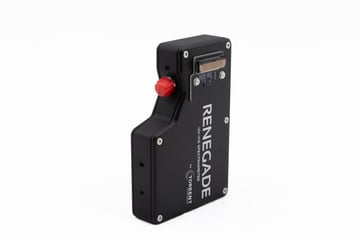
The Future of Automated Inspection
Manufacturers continue to face pressure to improve quality, reduce waste, and increase efficiency. As inspection requirements become more complex, image-based systems alone cannot provide all the information needed for reliable decision-making.
Spectrometers, multispectral cameras, and hyperspectral imaging systems provide data that reveals material characteristics beyond visible appearance, enabling more accurate classification, verification, and process control.
The result is a more capable generation of automated inspection systems that can identify what a product is made of, not simply what it looks like.
Need a spectral device tailored to your application? We offer a range of spectrometers, multispectral cameras, hyperspectral imaging systems, and X-ray imaging solutions with configurable spectral bands, sensor options, and packaging designs for OEM integration.
Contact our technical sales team today to discuss your requirements: sales@torrentphotonics.com.