
As imaging systems become smaller, more of the optical design challenge moves closer to the sensor. Applications such as spectroscopy, machine vision, remote sensing, aerospace imaging, and industrial inspection often require precise wavelength discrimination, but space constraints can limit the use of filter wheels, multiple cameras, or complex optical assemblies.
In these systems, optical filtering is not simply another component within the optical path. Filter placement, spectral performance, and integration with the detector can directly affect signal quality, measurement accuracy, and overall system size.
Traditional approaches often rely on discrete optical filters mounted in front of the sensor. While effective, this can increase package size, add complexity, and introduce additional optical interfaces. For multispectral and hyperspectral applications, the challenge becomes greater when multiple wavelength bands must be captured within a compact form factor.
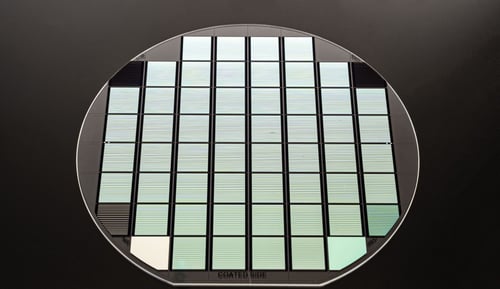
We address this challenge through micropatterned optical filters. Using lithographic patterning techniques, we can incorporate multiple dielectric, metallic, or colour filter regions onto a single substrate, enabling several spectral channels within one optical assembly. Our technology supports UV, visible, NIR, and SWIR wavelength ranges and is used in applications including multispectral imaging, spectroscopy, remote sensing, industrial sensing, and aerospace systems.
Moving optical functionality closer to the detector can also create opportunities that are difficult to achieve with standard sensor packages. Many commercially available CMOS and CCD sensors include a protective cover glass above the active imaging area. While necessary for protection, this additional optical interface can restrict some custom imaging architectures.
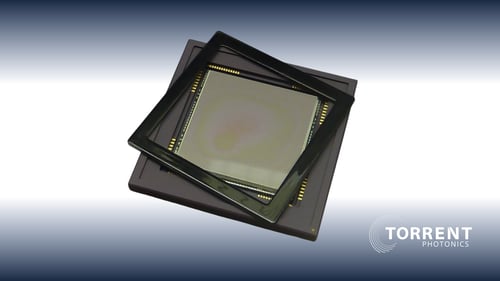
We provide image sensor modification services, including cover glass removal, to enable further sensor customization. Removing the cover glass provides direct access to the sensor surface for optical integration, reduces unwanted interfaces, and prepares the device for specialised optical assemblies.
Following cover glass removal, we can install and bond micropatterned filters directly above the image plane. Positioning filter functions closer to the detector surface can reduce system complexity while enabling application-specific sensing and imaging solutions that are not available from standard sensor configurations.
This approach gives designers greater flexibility when developing compact optical systems. Rather than adapting an instrument around the limitations of a standard sensor package, the sensor itself can be modified to support the optical requirements of the application.
For developers of advanced imaging, sensing, and spectroscopy systems, filter integration and sensor customization are becoming increasingly important design considerations. Our micropatterned filters, cover glass removal, and sensor modification capabilities help customers develop compact imaging systems that capture more information without increasing system complexity. These technologies are also used within our SpectroCam 2™ multispectral imaging platform, demonstrating how sensor-level optical integration can deliver multiple spectral channels in a single camera.
Contact our technical sales team today for further information: https://torrentphotonics.com/contact-us